
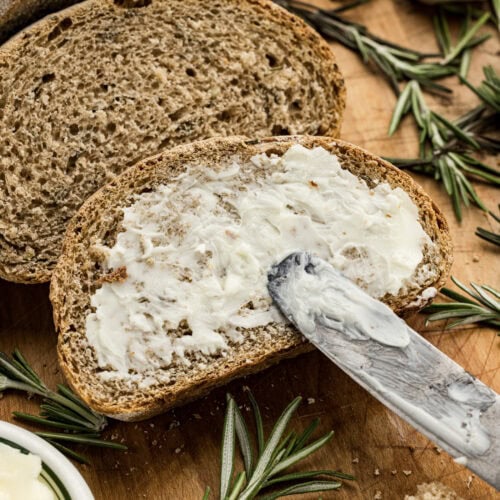
This rosemary garlic bread recipe is beaming with rustic charm from the flour-dusted crust down to the perfectly imperfect shape. Fresh herbs and garlic make it all the better.
Why this recipe works
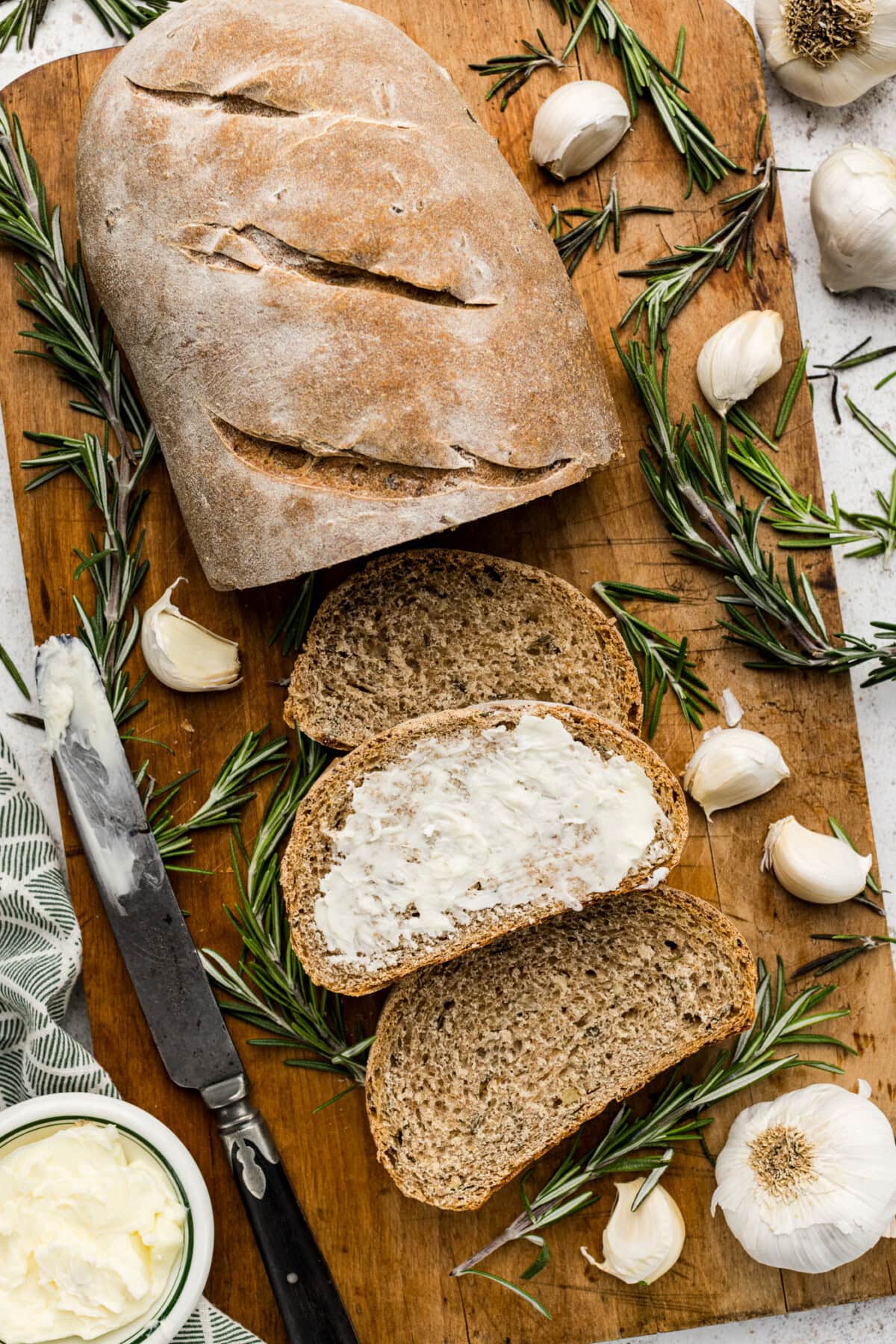
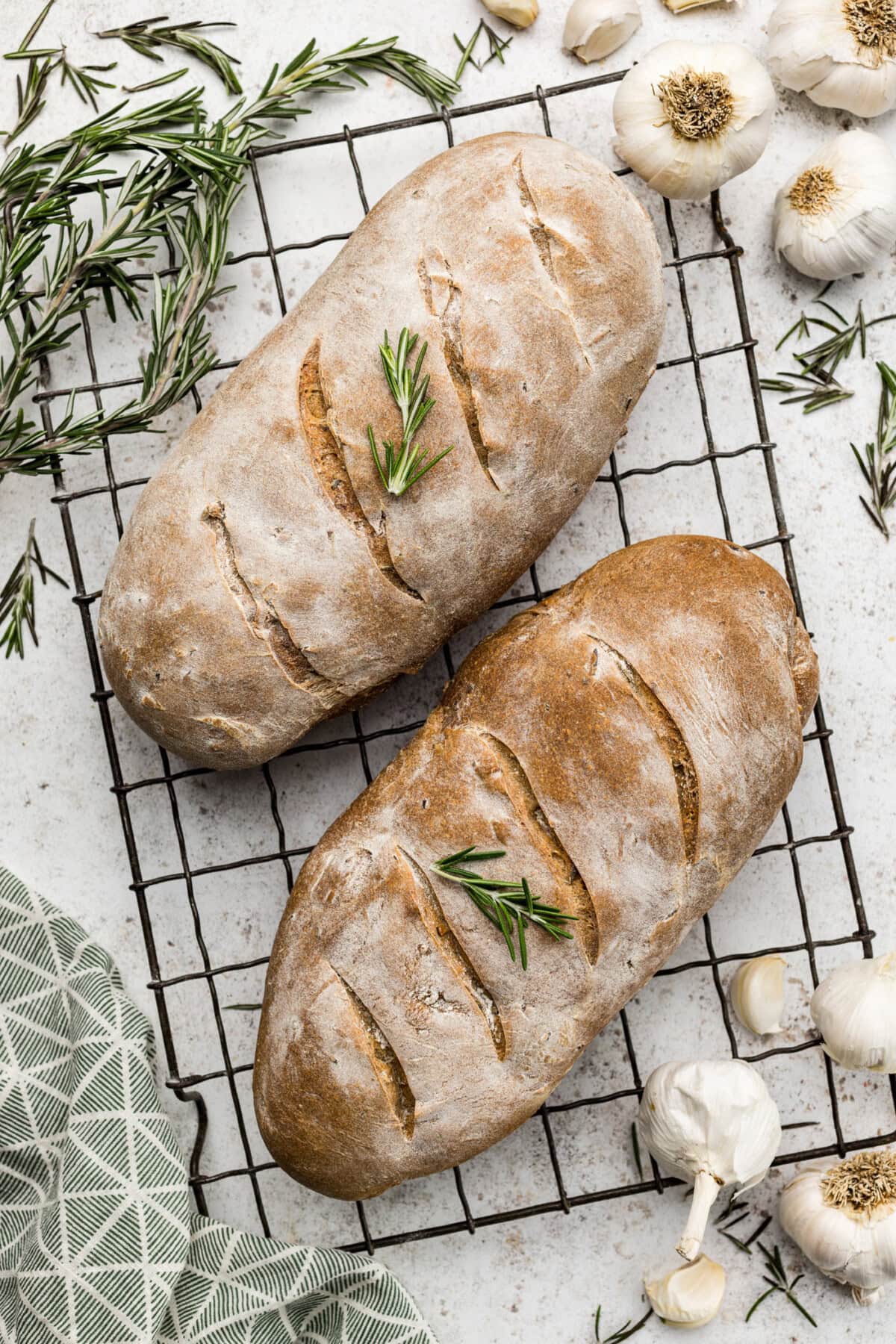
The absolute intoxicating aroma of rosemary garlic bread baking in the oven is practically otherworldly. If you couldn’t tell, a good, hearty, artisan bread is my weakness. This stunner is made in the food processor, a different method from the traditional mixer or hand-mixed variety. Plus, no matter the shape it ends up being, it will bake into a beautiful loaf with a lovely rustic crust.
Ingredients you will need
Get all measurements, ingredients, and instructions in the printable version at the end of this post.
Ingredient Info and Substitution Suggestions
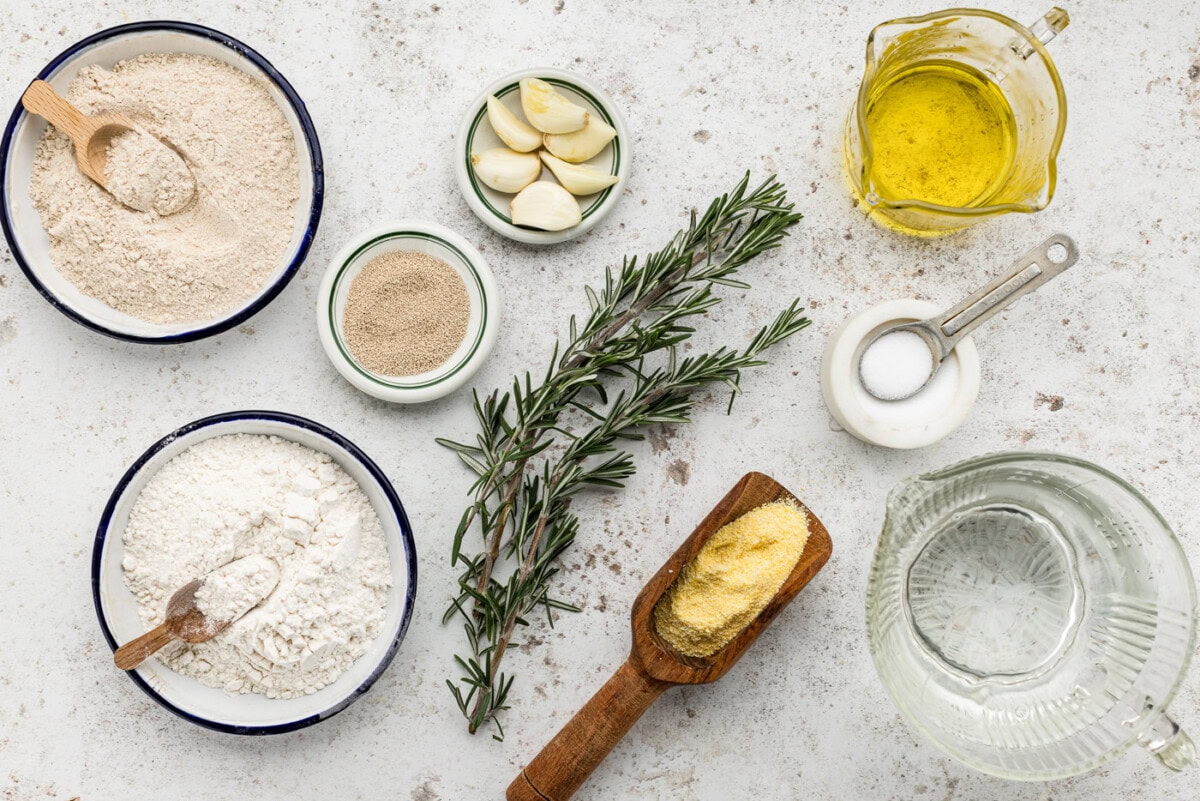
FLOUR – This bread uses a combination of whole wheat flour and all purpose flour, similar to a multigrain bread. The whole wheat adds that rustic charm and good structure, while the all purpose flour works to ensure you don’t end up with overly dense bread (makes it softer). I highly, highly recommend using a kitchen scale to weigh your ingredients, especially when making bread.
YEAST – Double check that your yeast is not expired before beginning. Your water should be between 105-110F, which is warm, not hot. Hot water can easily kill your yeast and cool water will slow the process down significantly. Use a thermometer if needed. You’ll know it’s ready once it begins to foam!
ROSEMARY – Fresh is absolutely best here.
GARLIC – I recommend fresh garlic over the bottled minced variety. Roasted garlic is another great option!
How to Make Rosemary Garlic Bread
These step by step photos and instructions are here to help you visualize how to make this recipe. You can Jump to Recipe to get the printable version of this recipe, complete with measurements and instructions at the bottom.
- To make the dough, in a small bowl, or 2-cup measuring cup, add the water and sprinkle the yeast on the surface, allowing it to stand for three minutes before whisking. Once dissolved, whisk in the olive oil.

- To mix the dough, place 2 3/4 cup all-purpose flour (358g) and 2 1/2 cups whole wheat flour (333g), garlic, rosemary, and salt in the bowl of a full sized food processor fitted with a dough blade.
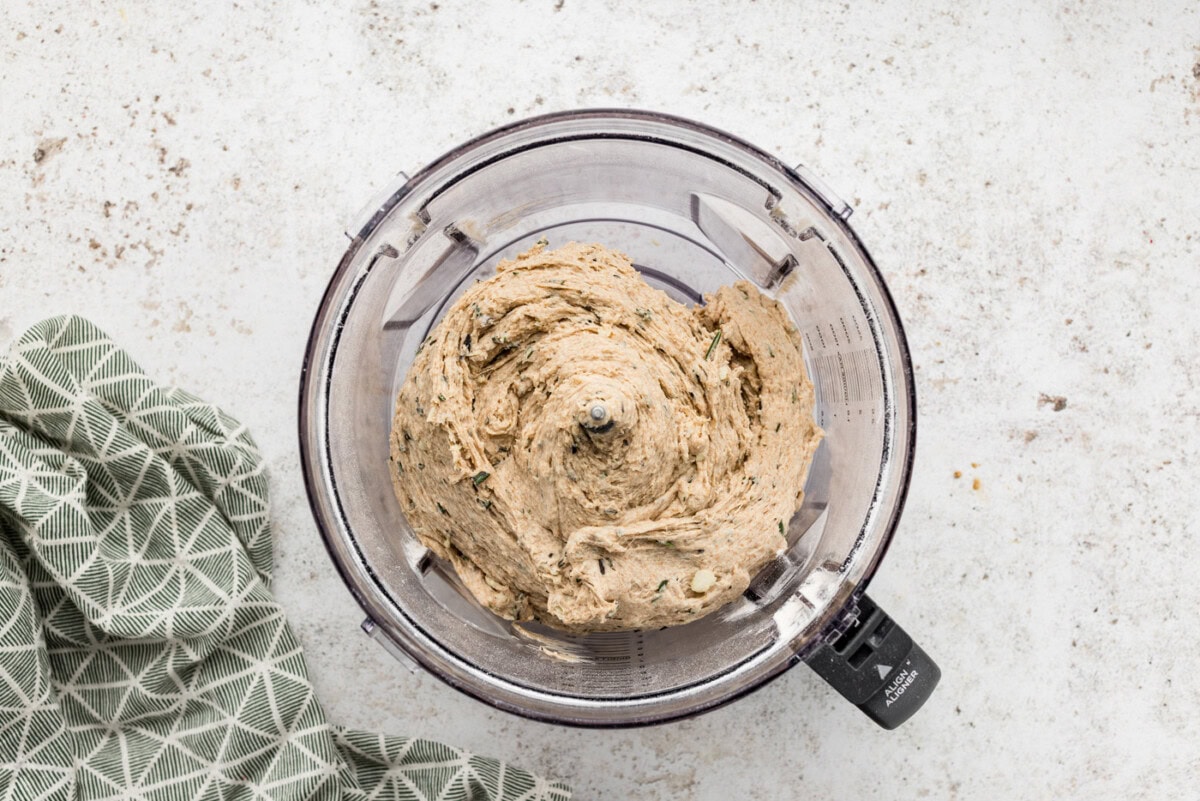
- Add water, oil, and yeast mixture and process to form a smooth, elastic, and slightly sticky dough, about 45 seconds. Incorporate the remaining 1/4 cup all-purpose flour (32g), a tablespoon at a time, if the dough is too soft.

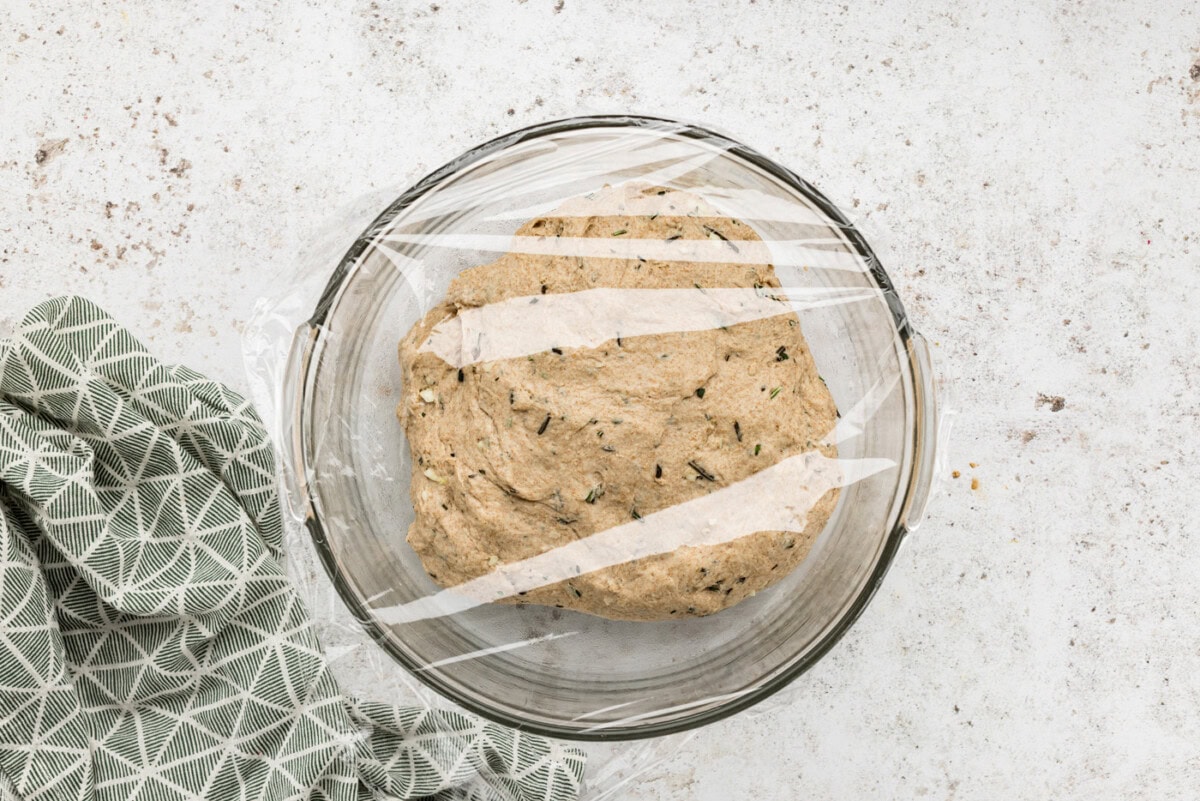
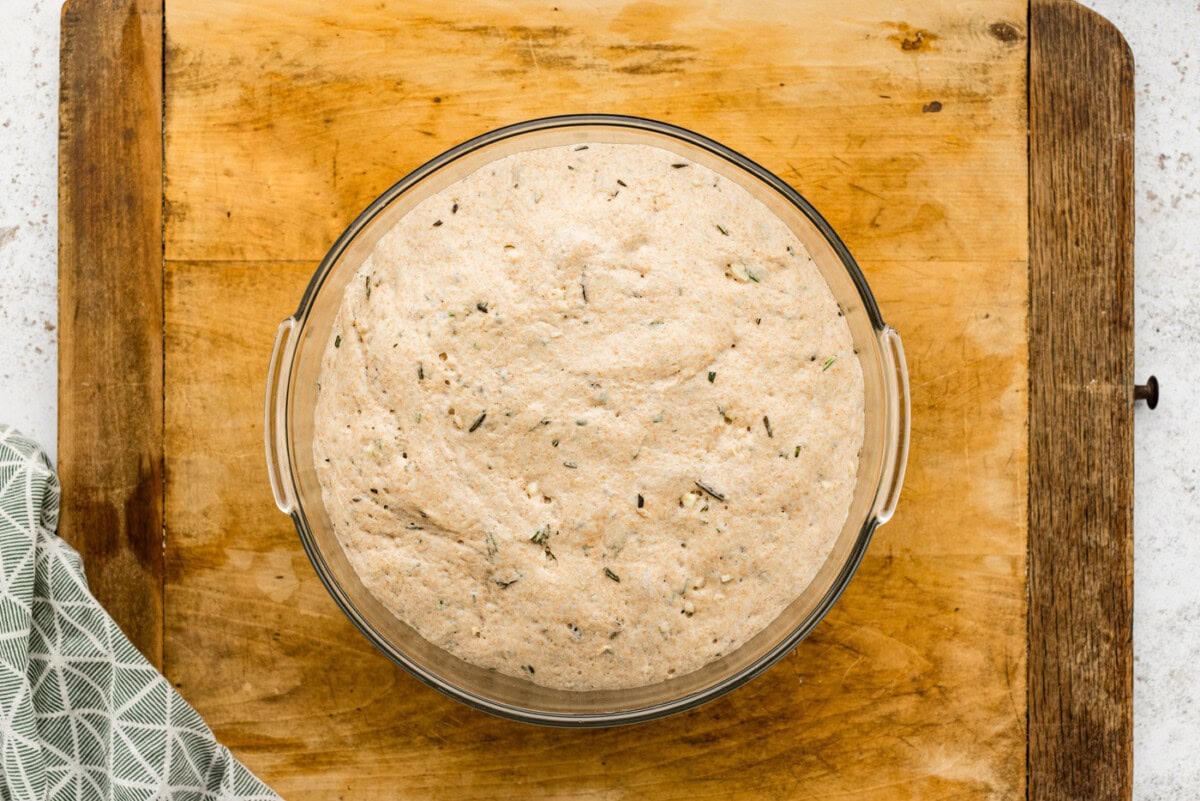
- Place dough in an oiled bowl, turning the dough over so the top is also oiled. Cover bowl with plastic wrap and allow dough to rise at room temperature until doubled.
To Shape and Bake the Loaves
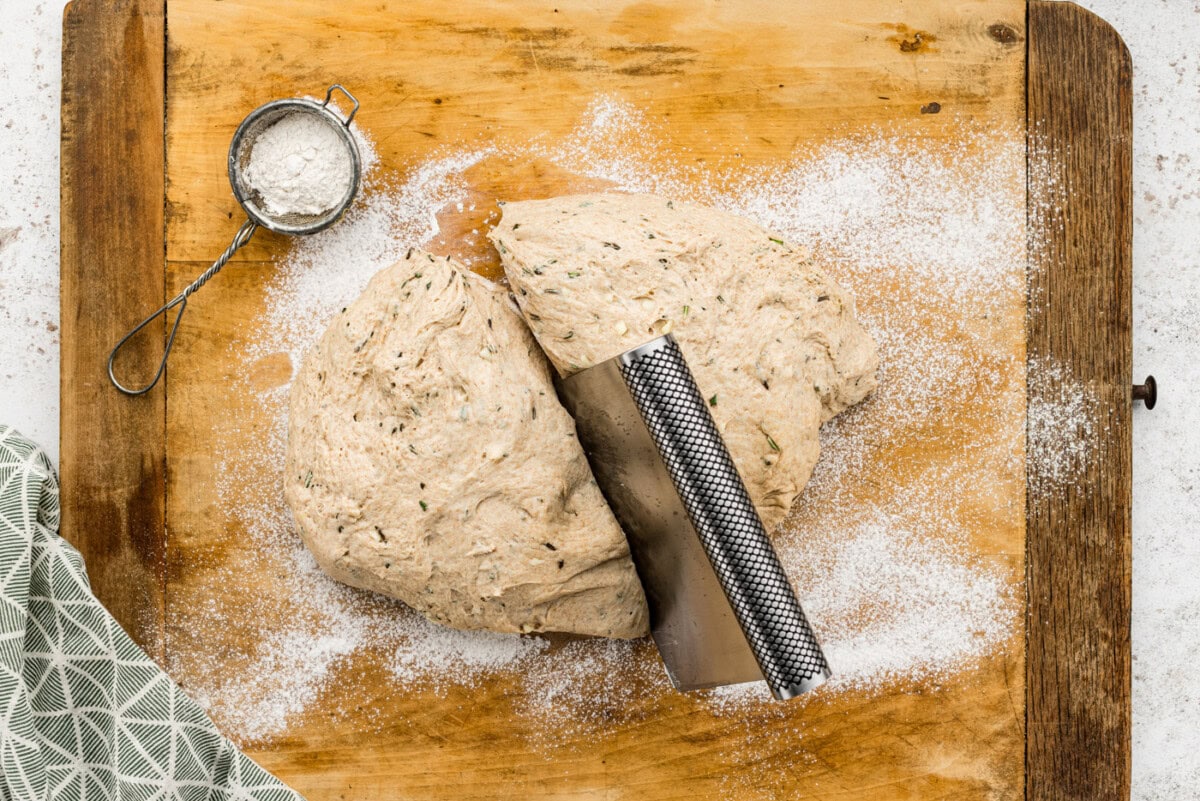
- Scrape risen dough onto a lightly floured surface and press it to deflate it. Divide the dough in half and shape one piece at a time.
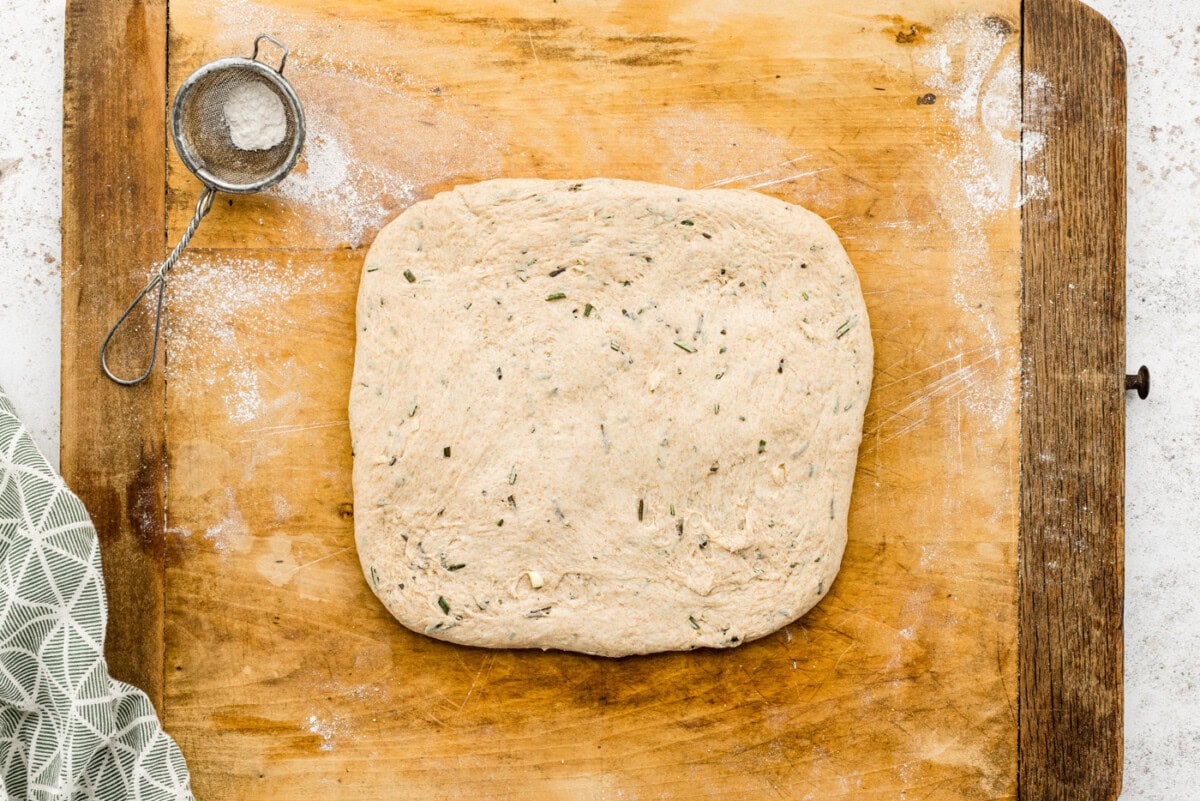
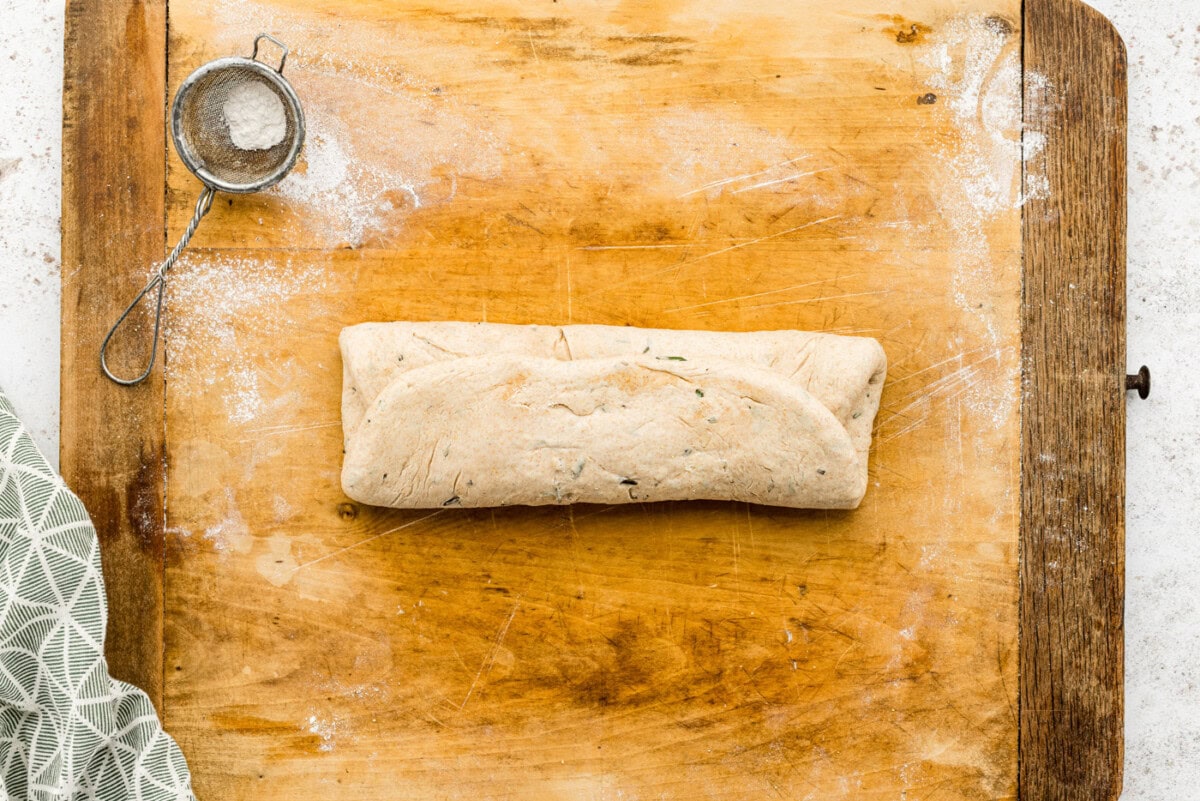
- Press dough into a square, then roll it up tightly. Rotate cylinder of dough 90 degrees and roll it up again from the short end. Arrange the dough seam side down, cover with plastic or a towel, and let it rest for 5 minutes. Repeat with the remaining piece of dough.
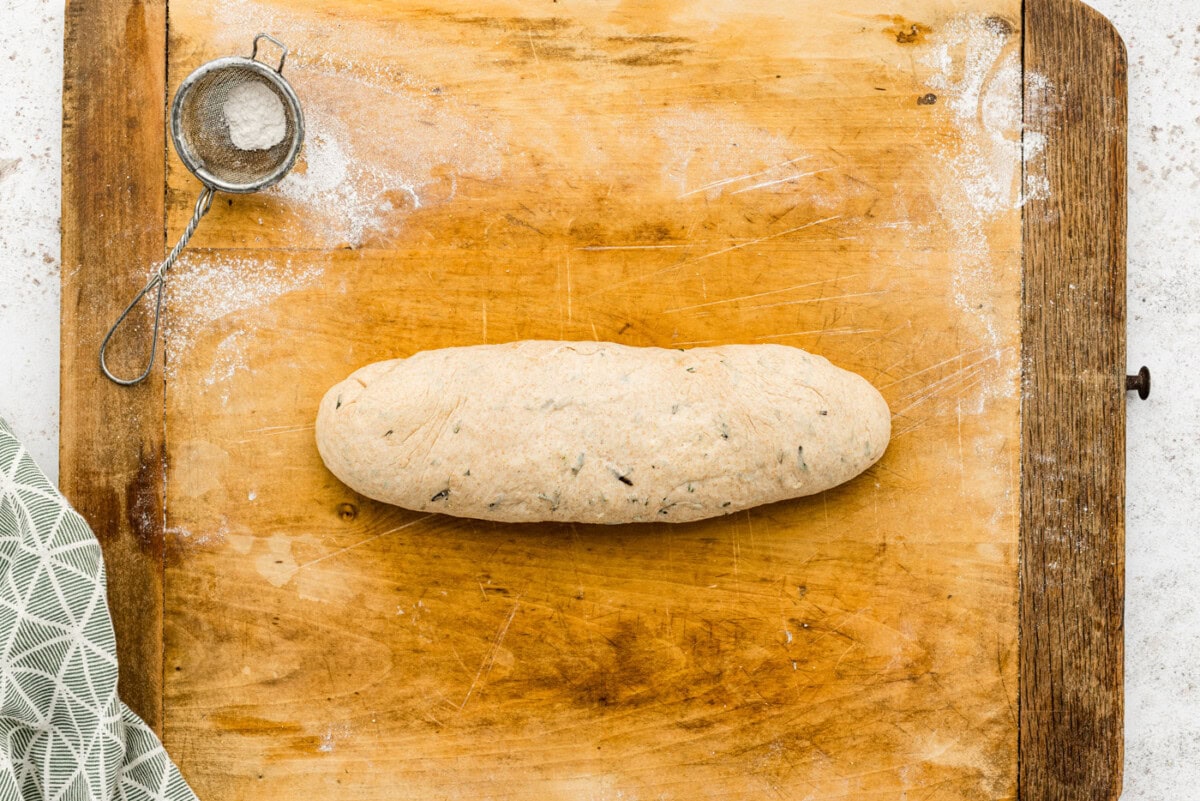
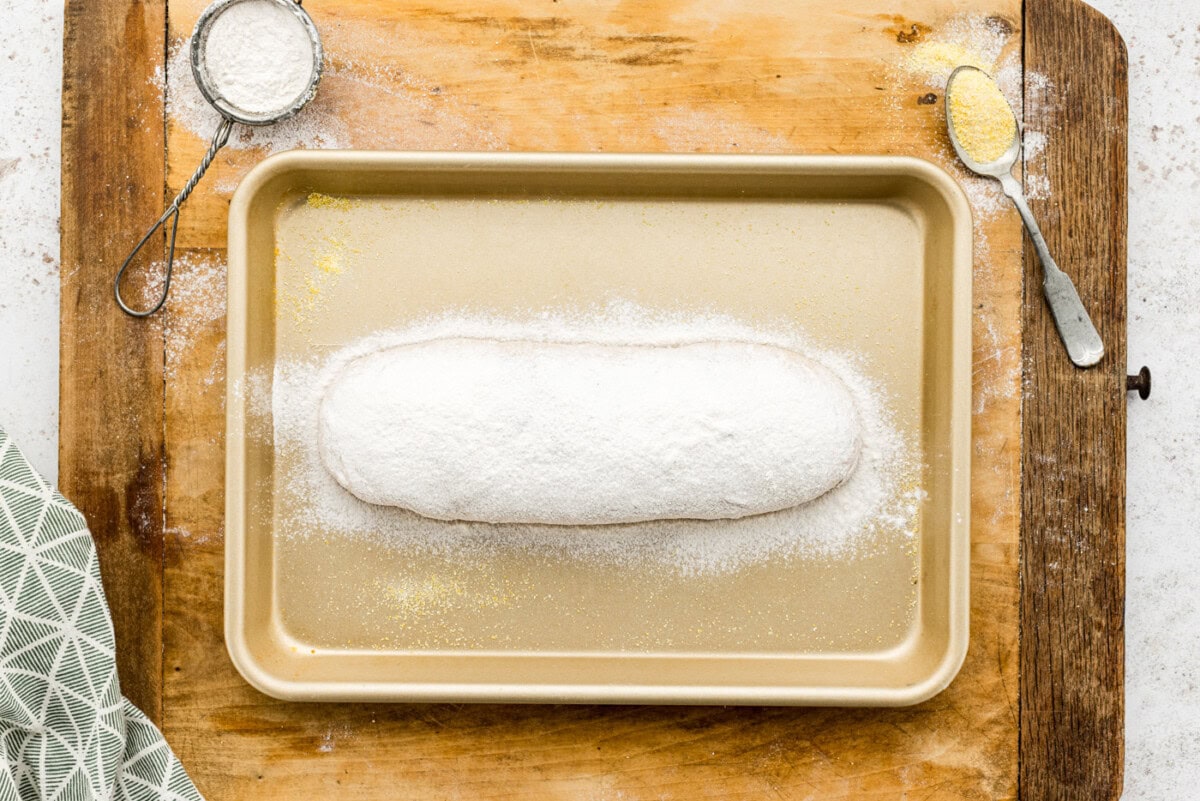
- Dust pan with cornmeal. Roll each piece of dough under the palms of your hands to elongate it. Work from the middle of the loaf outward, pointing the ends slightly. Place loaves seam side down on cookie sheets and dust each loaf heavily with flour, using about 1/4 cup in all. Cover with plastic wrap or a towel and allow to rise until doubled.
- About 30 minutes before you intend to bake the loaves, preheat oven to 500 degrees F and set racks at the middle and lowest levels. Set a pan on the lowest rack to absorb some of the excess bottom heat and keep the bottom of the loaves from burning.
- Holding a razor blade or the point of a very sharp knife at a 30-degree angle to the top of each loaf, make 3 to 4 diagonal slits in each loaf.
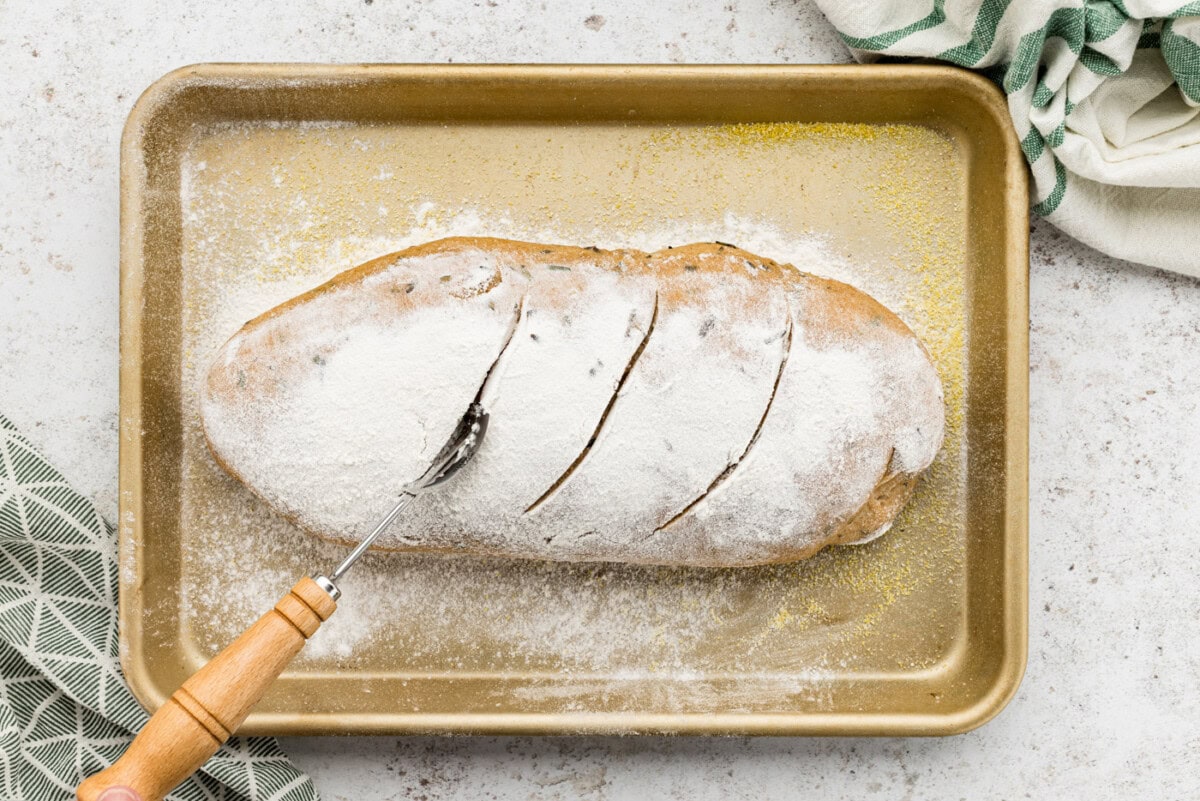
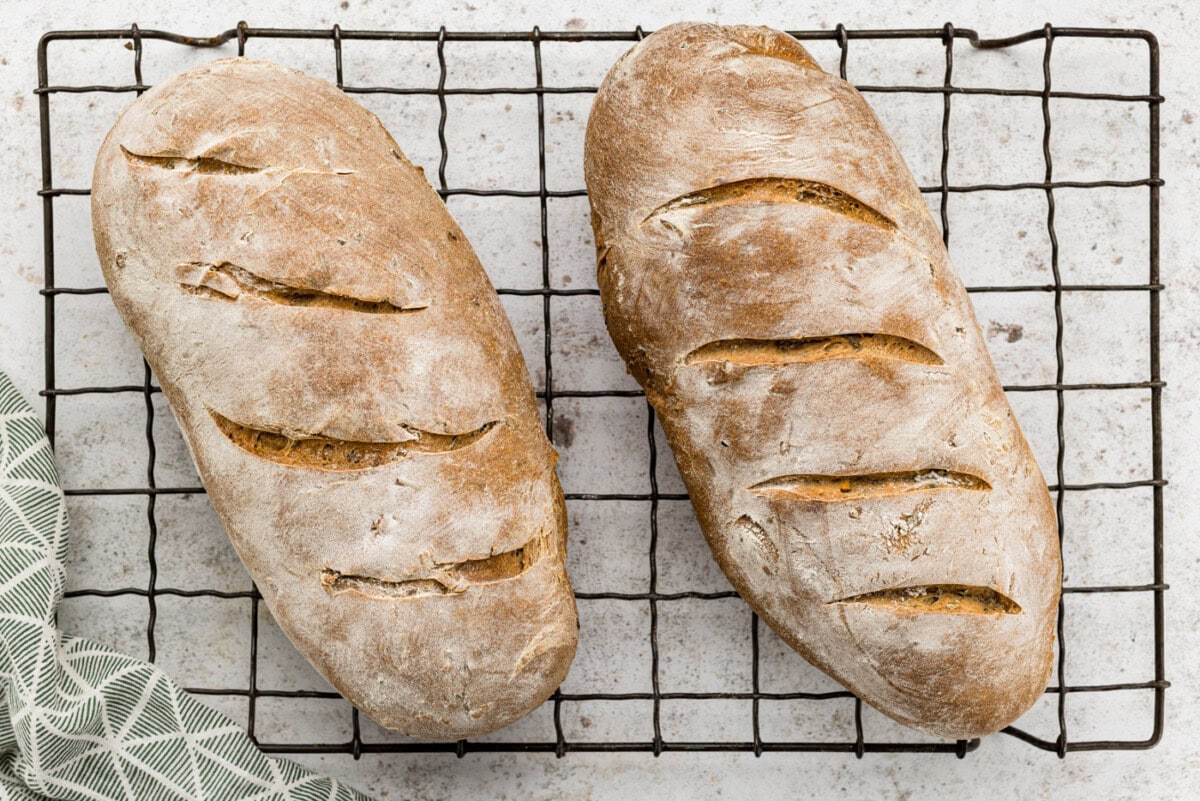
- Immediately place the loaves in the oven and lower the temperature to 450 degrees F. After the loaves have baked for 20 minutes and are completely risen, lower the temperature to 350 degrees F and continue baking for about 20 to 30 minutes longer, until bread reaches an internal temperature of about 210-220 degrees F. Remove loaves from oven and cool on a rack.
Frequently Asked Questions & Expert Tips
Yes, you can prepare the dough as written up to 3 days in advance. Place the dough in a greased bowl and cover it with plastic wrap. Remove the dough from the refrigerator about an hour to an hour and a half before you’re ready to bake it, allowing it to rest at room temperature. Bake as normal.
Yes, of course, though I personally recommend using fresh rosemary as it’s the main star of the recipe! The general rule for swapping fresh for dried herbs is a 3:1 ratio. So, you’ll want to use 1 Tablespoon plus 1 teaspoon of dried rosemary.
The most common culprit is dead yeast. It’s likely expired, dead before using, or killed by too hot of water while proofing. It’s important to note that your bread will rise taller after rolling (give it a few hours), and it will definitely rise well in the oven. If your bread did not rise in the oven, then the yeast is more than likely dead or the dough was left to rise in too cold of an area.
This bread is best enjoyed right away, but you can save leftovers kept in an air-tight container, paper bag, or wrapped in foil. Store at room temperature for up to 3 days. You can freeze it for longer storage, either sliced or whole, wrapped with plastic wrap followed by aluminum foil. Freeze for up to 3 months.
Serving Suggestions
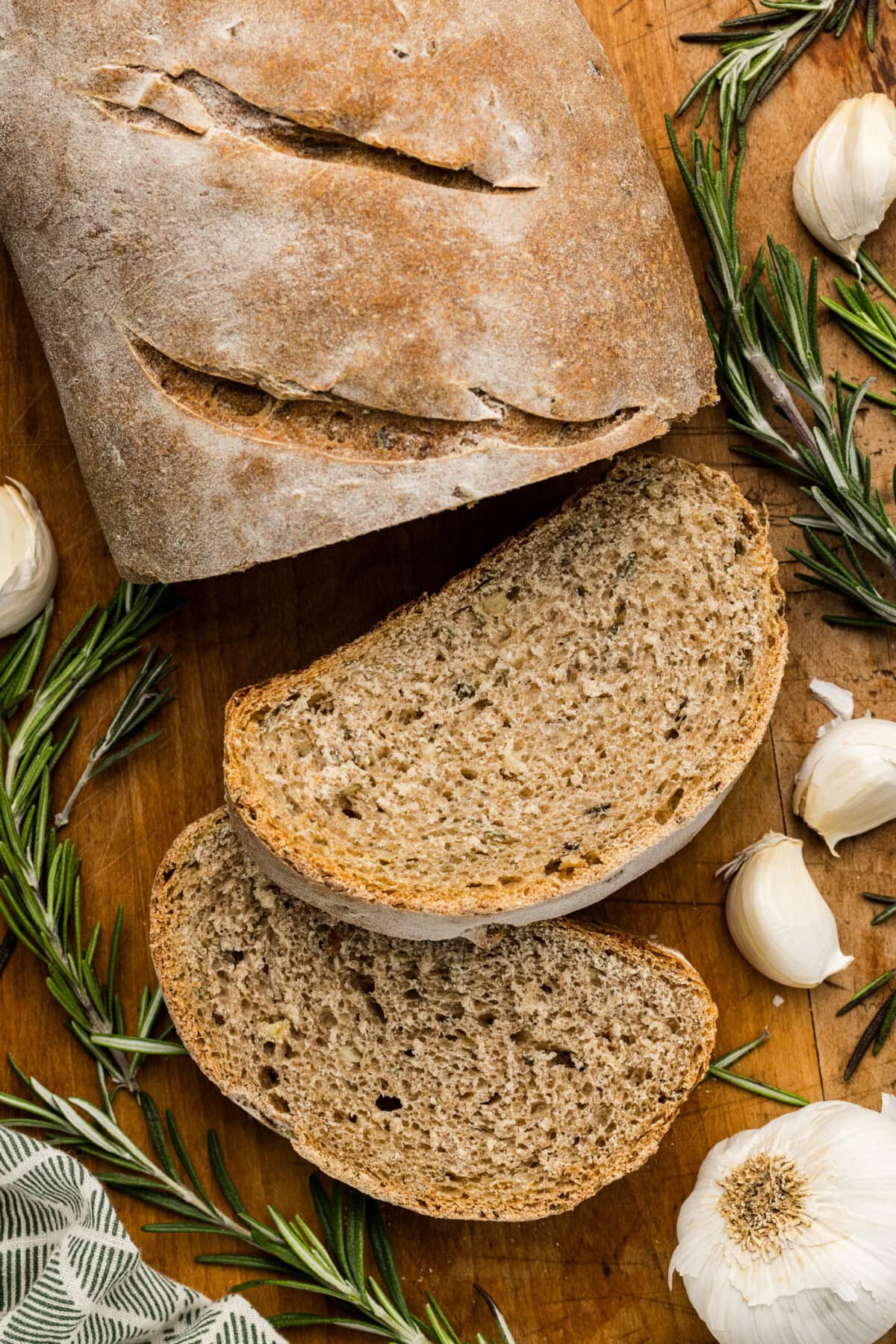
This hunk of good lookin’ rustic rosemary garlic bread is quite the vehicle for sandwiches, paninis, or a heaping slab of butter. I love it with a hearty potato soup, personally. If your bread has gone stale, cube it up and make homemade croutons!
More Bread Recipes
I love to bake and cook and share my kitchen experience with all of you! Remembering to come back each day can be tough, that’s why I offer a convenient newsletter every time a new recipe posts. Simply subscribe and start receiving your free daily recipes!
Rosemary Garlic Bread
IMPORTANT – There are often Frequently Asked Questions within the blog post that you may find helpful. Simply scroll back up to read them!
Print It Pin It Rate ItIngredients
- 2 cups warm tap water about 110 degrees
- 2 ½ teaspoons active dry yeast 1 envelope
- ¼ cup olive oil
- 390 grams all-purpose flour 3 cups, DIVIDED
- 333 grams whole wheat flour 2 1/2 cups
- 6 cloves garlic minced
- ⅓ cup fresh rosemary chopped
- 4 teaspoons salt
- ¼ cup all purpose flour for dusting the loaves
- Cornmeal for the pans
Things You’ll Need
- Food processor 12 cup capacity
- Baking sheet or large jelly roll pan
Before You Begin
- I highly, highly recommend using a kitchen scale to weigh your ingredients, especially when making bread or baked goods.
- Double check that your yeast is not expired before beginning. Your water should be between 105-110F, which is warm, not hot. Hot water can easily kill your yeast and cool water will slow the process down significantly. Use a thermometer if needed. You’ll know it’s ready once it begins to foam!
Instructions
- To make the dough, in a small bowl, or 2-cup measuring cup, add the water and sprinkle the yeast on the surface, allowing it to stand for three minutes before whisking. Once dissolved, whisk in the olive oil.2 cups warm tap water, 2 1/2 teaspoons active dry yeast, 1/4 cup olive oil
- To mix the dough, place 2 3/4 cup all-purpose flour (358g), whole wheat flour, garlic, rosemary, and salt in the bowl of a full sized food processor fitted with a dough blade.333 grams whole wheat flour, 6 cloves garlic, 1/3 cup fresh rosemary, 4 teaspoons salt
- Add water, oil, and yeast mixture and process to form a smooth, elastic, and slightly sticky dough, about 45 seconds. Incorporate the remaining 1/4 cup all-purpose flour (32g), a tablespoon at a time, if the dough is too soft.
- Place dough in an oiled bowl, turning the dough over so the top is also oiled. Cover bowl with plastic wrap and allow dough to rise at room temperature until doubled.
- To shape loaves, scrape risen dough onto a lightly floured surface and press it to deflate it. Divide the dough in half and shape one piece at a time. Press dough into a square, then roll it up tightly. Rotate cylinder of dough 90 degrees and roll it up again from the short end. Arrange the dough seam side down, cover with plastic or a towel, and let it rest for 5 minutes. Repeat with the remaining piece of dough.
- Dust pan with cornmeal. Roll each piece of dough under the palms of your hands to elongate it. Work from the middle of the loaf outward, pointing the ends slightly. Place loaves seam side down on cookie sheets and dust each loaf heavily with flour, using about 1/4 cup in all. Cover with plastic wrap or a towel and allow to rise until doubled.
- About 30 minutes before you intend to bake the loaves, preheat oven to 500 degrees F and set racks at the middle and lowest levels. Set a pan on the lowest rack to absorb some of the excess bottom heat and keep the bottom of the loaves from burning.
- Holding a razor blade or the point of a very sharp knife at a 30-degree angle to the top of each loaf, make 3 to 4 diagonal slits in each loaf. Immediately place the loaves in the oven and lower the temperature to 450 degrees F.
- After the loaves have baked for 20 minutes and are completely risen, lower the temperature to 350 degrees F and continue baking for about 20 to 30 minutes longer, until bread reaches an internal temperature of about 210-220 degrees F. Remove loaves from oven and cool on a rack.
Expert Tips & FAQs
- You can prepare the dough as written up to 3 days in advance. Place the dough in a greased bowl and cover it with plastic wrap. Remove the dough from the refrigerator about an hour to an hour and a half before you’re ready to bake it, allowing it to rest at room temperature. Bake as normal.
- This bread is best enjoyed right away, but you can save leftovers kept in an air-tight container, paper bag, or wrapped in foil. Store at room temperature for up to 3 days. You can freeze it for longer storage, either sliced or whole, wrapped with plastic wrap followed by aluminum foil. Freeze for up to 3 months.
Nutrition
The recipes on this blog are tested with a conventional gas oven and gas stovetop. It’s important to note that some ovens, especially as they age, can cook and bake inconsistently. Using an inexpensive oven thermometer can assure you that your oven is truly heating to the proper temperature. If you use a toaster oven or countertop oven, please keep in mind that they may not distribute heat the same as a conventional full sized oven and you may need to adjust your cooking/baking times. In the case of recipes made with a pressure cooker, air fryer, slow cooker, or other appliance, a link to the appliances we use is listed within each respective recipe. For baking recipes where measurements are given by weight, please note that results may not be the same if cups are used instead, and we can’t guarantee success with that method.
I first shared this bread back in 2011 on my site and it has since been updated with new photos and tips. Original recipe credit for this lovely bread goes to Katie from Good Life Eats. I slightly adapted it to adjust for what I had on hand at the time.

- Apple Cider Sangria - September 29, 2026
- Pumpkin Truffles - September 22, 2026
- Double Chocolate Zucchini Muffins - September 9, 2026









Deeba PAB says
Rustic and moorish…gorgeous bread! I saw it at Katies too! Will try this as soon as my rosemary grows
Megan says
Nothing better then homemade bread, except one that has garlic and rosemary. I bet your house smelled delicious!
J3nn (Jenn's Menu and Lifestyle Blog) says
The only reason I buy bakery bread is because it's so crusty. I didn't know if I could make it that way at home, but this boosts my confidence!! That looks perfect!
Katie | GoodLife Eats says
So glad you liked it!
Maria says
Rosemary bread is my favorite! Looks great!
Amanda says
I really will be making this again, so delicious!
The Food Hound says
Yup, this is a winner! Love garlic and rosemary together!
Lana @ Never Enough Thyme says
Rosemary and garlic is one of my favorite combinations. I can just imagine how good this bread would be for a roast beef sandwich :-)
Sue says
Your bread looks perfect! Rosemary and garlic together sounds out of this world! I can imagine how GOOD this would be toasted with butter:)
Tami says
Looks fantastic, Amanda! Your bread would be a big hit at our table. :)
Winnie says
This looks amazing! I love rosemary bread and love that you added garlic, too :)