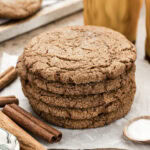
Molasses Spice Cookies
Servings: 24 cookies
Calories: 161cal
Equipment
- Stand mixer or hand mixer
- Silicone baking mat or parchment paper
Ingredients
- 10.5 ounces all-purpose flour 2 1/3 cup
- 2 teaspoons baking soda
- ½ teaspoon salt
- 2 teaspoons ground ginger
- ½ teaspoon ground cinnamon
- ¼ teaspoon ground allspice
- pinch coarsely ground black pepper
- 6 ounces unsalted butter room temperature. 3/4 cup
- 7 ounces light brown sugar 1 cup
- 4 ounces molasses not blackstrap. 1/2 cup
- 1 large egg at room temperature
- 3.5 ounces granulated sugar for rolling, 1/2 cup
Instructions
- Whisk together the flour, baking soda, salt, ginger, cinnamon, allspice, and pepper.10.5 ounces all-purpose flour, 2 teaspoons baking soda, 1/2 teaspoon salt, 2 teaspoons ground ginger, 1/2 teaspoon ground cinnamon, 1/4 teaspoon ground allspice, pinch coarsely ground black pepper
- Working with a stand mixer, preferably fitted with a paddle attachment, or with a hand mixer in a large bowl, beat the butter on medium speed until smooth and creamy.6 ounces unsalted butter
- Add the brown sugar and molasses and beat for 2 minutes or so to blend, scraping down the sides of the bowl as needed.7 ounces light brown sugar, 4 ounces molasses
- Add the egg and beat for 1 minute more. Reduce the mixer speed to low and add the dry ingredients, mixing until the flour and spices disappear. If some flour remains in the bottom of the bowl, to avoid over-beating the dough, mix in the last of the dry ingredients by hand with a rubber spatula. You'll have a smooth, very soft dough.1 large egg
- Divide the dough in half and wrap each piece in plastic wrap. Freeze for 30 minutes, or refrigerate for at least 1 hour. (The dough can be kept refrigerated for up to 4 days.)
- Center a rack in the oven and preheat the oven to 350 degrees F.
- Line two baking sheets with parchment or silicone mats. Put the sugar in a small bowl.3.5 ounces granulated sugar
- Working with one packet of dough at a time, divide it into 12 pieces, and roll each piece into a smooth ball between your palms. One by one, roll the balls around in the bowl of sugar, then place them on one of the baking sheets.TIP - My cookie dough balls weighed around 36-37 grams (1.3 oz) each.
- Dip the bottom of a glass into the sugar and use it to press down on the cookies until they are about 1/2 inch thick.TIP - For the first cookie you press with the glass, you may need to press, then dip into the sugar so it will stick.
- Bake the cookies one sheet at a time for 12 to 14 minutes, or until the tops feel set to the touch. I would suggest baking only 6 dough balls at a time. Remove the baking sheet from the oven and, if the cookies have spread and are touching, use the edge of a metal spatula to separate them while they are still hot.
- Transfer the cookies to a rack to cool to room temperature. Repeat with the second batch of dough.
Notes
- I highly recommend weighing your ingredients using a kitchen scale. If you do not own a scale, use the scoop and sweep method to weigh your flour. Too much flour will result in dry, dense, and crumbly cookies. Too little flour and you end up with flat cookies that spread too thin on the sheet.
- Room temperature (or softened) butter means you should take it out of the fridge about 20 minutes before using it. You don’t want it too soft. Cut the butter into slices and let it rest on the counter while you prep the other ingredients.
- For the best results, bring the eggs out at the same time as the butter.
- Make sure your brown sugar is fresh (still partially wet and not dried out), this can make a big difference when it comes to the moisture and chewiness in your cookies!
- Look for molasses labeled "original" or "unsulphored." You do not want to use blackstrap molasses for these cookies, as its flavor is too strong and can make your cookies taste overpowering and dry.
Nutrition
Serving: 1cookie | Calories: 161cal | Carbohydrates: 25g | Protein: 2g | Fat: 6g | Saturated Fat: 4g | Polyunsaturated Fat: 0.3g | Monounsaturated Fat: 2g | Trans Fat: 0.2g | Cholesterol: 23mg | Sodium: 193mg | Potassium: 101mg | Fiber: 0.4g | Sugar: 16g | Vitamin A: 189IU | Vitamin C: 0.01mg | Calcium: 22mg | Iron: 1mg
